Hapkido
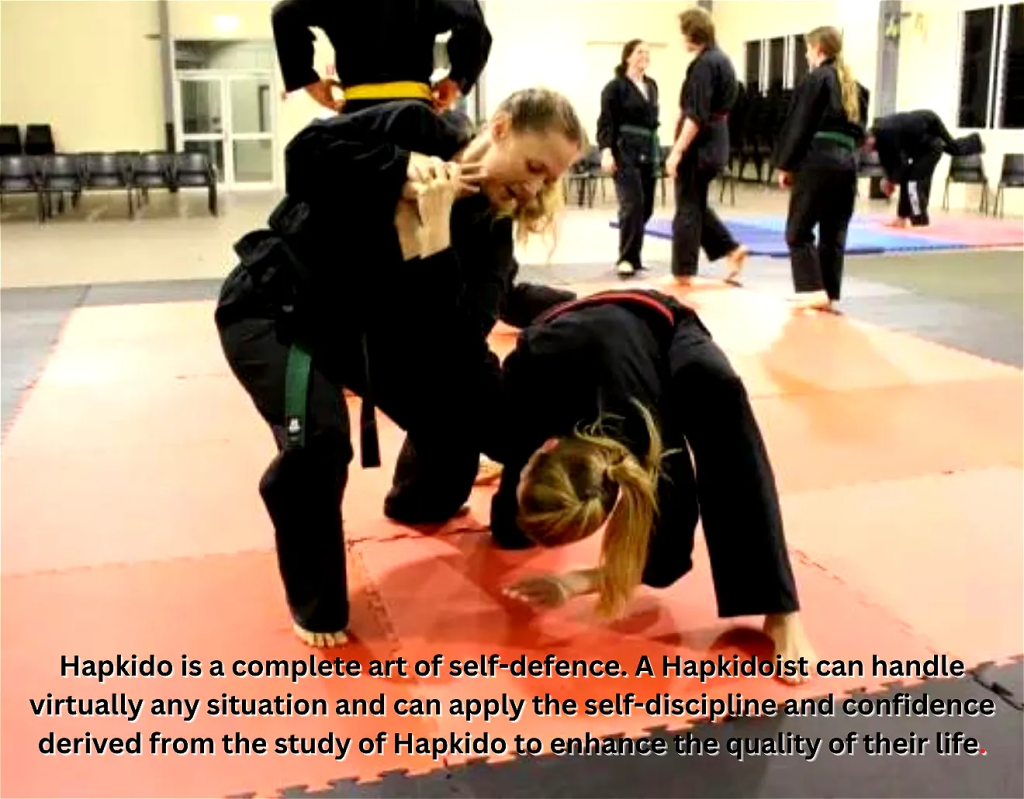
Hapkido offers a fun way to stay fit, flexible, and healthy while developing a great self defense base that covers both standing and ground fighting techniques.

Hapkido provides an engaging avenue to enhance fitness, flexibility, and overall health while cultivating a robust foundation in self-defense encompassing both standing and ground fighting techniques.

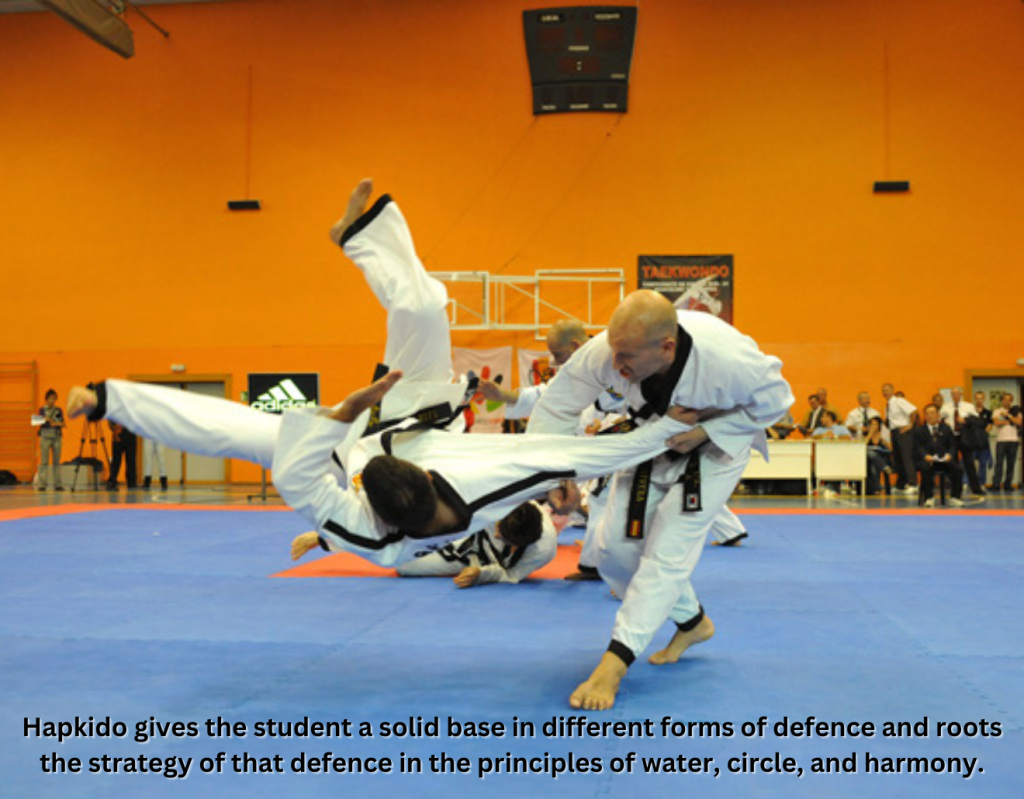
Hapkido is a Korean martial art practised the world over. Characterized by joint locks, throws, and dynamic kicking techniques, it is unique among Korean martial arts (Taekwondo, Tang Soo Do) in its emphasis on deflecting an opponent’s attacks instead of forceful blocking.

Hapkido is the “anti-martial art”. It was designed as a way to defend against and overcome an attacker with skill in many forms of martial combat.

With roots in Aiki-jujitsu, Hapkido adds striking and punching to joint locks, throws, and grappling, making it one of the original mixed martial arts. However, unlike modern MMA training, Hapkido gives the student a solid base in different forms of defence and roots the strategy of that defence in the principles of water, circle, and harmony. This gives the student a solid framework on which to develop their skill so that they are not caught off-guard when in real defence situations.

Hapkido prioritizes self-defence applications over sport fighting, incorporating a diverse array of traditional and improvised weapons such as knives, swords, bo-staffs, and nunchakus, as well as everyday items like canes, ropes, and clothing.

This comprehensive system equips practitioners with the skills to confidently navigate real-world combat scenarios, fostering quick acquisition of practical and impactful fighting techniques that bolster newfound confidence. Renowned for its effectiveness, Hapkido has long been integrated into military and law enforcement training programs, proving invaluable for situational self-defence, apprehension, and restraining techniques.

Whether you seek enjoyment, camaraderie, fitness, or a boost in self-assurance, Hapkido welcomes you to experience its multifaceted benefits, offering a fulfilling journey towards improved well-being and confidence while forging new friendships along the way.

The Birth of Hapkido
Hapkido History

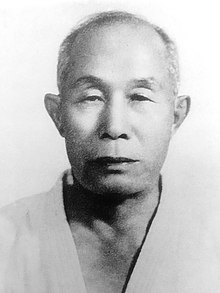
Known as the father of Hapkido, Yong Sul Choi was taken to Japan around 1912 as a child labourer. He was arranged to be cared for in a Buddhist temple in Kyoto under the care of a monk Kintaro Wadanabi.

During the late 1800s to 1945, Korea faced conflicts with China and Japan, leading many Koreans to delve into martial arts practiced in these countries. However, in 1910, Japan annexed Korea, abolishing the Korean monarchy and banning all native martial arts. Despite this, Koreans clandestinely studied Japanese Jujutsu, Karate, Judo, Kendo, and Chinese Kung Fu, while continuing to practice native martial arts in secret, with Korean monasteries playing a crucial role in preserving these traditions.

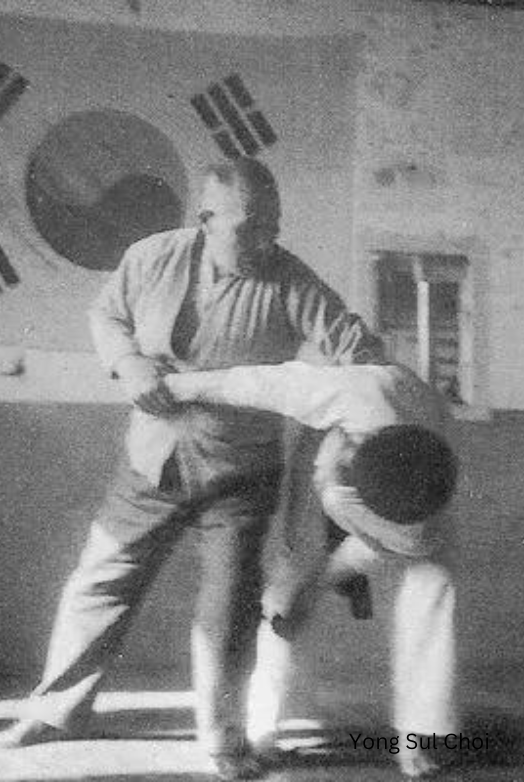
Post-World War II, many Koreans who had learned Japanese and Chinese martial arts sought to rediscover their heritage. They turned to the Muye Dobo Tongji to revive Korean martial arts. One pivotal figure in this revival was Yong Sul Choi, known as the father of Hapkido. Choi was taken to Japan as a child labourer and trained under the guidance of grandmaster Sokaku Takeda in Daito-Ryu Aiki-Jujutsu, the oldest Jujutsu system in Japan.

Choi’s fascination with martial arts led him to continue Takeda’s legacy, adopting the name Asao Yoshida and dedicating himself to mastering Daito-Ryu. He returned to Korea after World War II, where he began teaching his art, initially called Yu Sool (soft art), later renamed Yu Kwon Sool (soft fist art), and eventually shortened to Hapkido in 1958.

Yong Sul Choi’s innovative techniques, emphasizing coordinated power and subtle motions, became the foundation of Hapkido. His dedication to preserving and promoting Korean martial arts earned him the title of Dojunim (founder). Despite his passing in 1986, Choi’s legacy continues to influence martial artists worldwide, with thousands paying homage to him at his grave in Daegu each year. As a devoted family man and martial arts enthusiast, his impact on the global martial arts community remains enduring.

3 free lessons as an introductory offer

Come try Hapkido if your looking to have fun, meet new friends, get fit and improve your well-being and confidence.

RECENT NEWS
LATEST NEWS FROM OUR BLOG
22 Feb: The Transformative Power of Brazilian Jiu-Jitsu

Many attest to the incredible physical transformations they’ve undergone, achieving levels of fitness they once deemed unattainable. Strength gains, weight loss, improved posture, and heightened confidence are just a few of the benefits they attribute to their BJJ journey.

16 Feb: Simple Blog Post (Demo)
17 Feb: Simple Blog Post (Demo)
18 Feb: Simple Blog Post (Demo)
19 Feb: Simple Blog Post (Demo)
20 Feb: Simple Blog Post (Demo)
21 Feb: Simple Blog Post (Demo)
18 Feb: IBJJF European Championship 2024 Medal Tally by Country

The European Jiu-Jitsu Championship, organized by the International Brazilian Jiu-Jitsu Federation (IBJJF), stands out for its ability to attract a diverse range of nationalities, thanks to its European location and the continent’s relatively relaxed travel guidelines. This tournament draws competitors from around the globe, creating a melting pot of talent that serves as a reliable indicator of the strongest nations in the sport across all belt levels.

20 Feb: Exploring the Philosophy of Hapkido

Hapkido, known as the “Way of Harmonious Energy,” transcends the label of a mere martial art. It embodies a profound philosophy that permeates every technique, guiding practitioners not only on the mats but also through the intricacies of life.

24 Feb: 5 Nutrition Rules

Embarking on a martial arts journey is not just about mastering techniques on the mat; it’s also about nourishing your body to reach its full potential.

24 Feb: 10 Health Benefits of Martial Arts

Let’s delve into ten remarkable health benefits of martial arts that extend far beyond the dojo. It is also a potent catalyst for enhancing overall health