
IBJJF European Championship 2024 Medal Tally
Despite the ongoing narrative from prominent figures in no-gi jiu-jitsu that the kimono is becoming obsolete in our sport, gi jiu-jitsu tournaments continue to experience significant growth each year. This trend was evident over the past year in various championships, including the IBJJF Worlds, Pans, World Masters/Jiu-Jitsu Con, CBJJ’s Brasileiro, AJP Abu Dhabi World Pro, and the European Championship, which took place over 7 days from January 20-27, 2024.
The European Jiu-Jitsu Championship, organized by the International Brazilian Jiu-Jitsu Federation (IBJJF), stands out for its ability to attract a diverse range of nationalities, thanks to its European location and the continent’s relatively relaxed travel guidelines. This tournament draws competitors from around the globe, creating a melting pot of talent that serves as a reliable indicator of the strongest nations in the sport across all belt levels.
In 2024, Brazil showcased its dominance at the European Championship in a manner unprecedented since records began. An impressive 55% of medals across the combined blue belt (adult) to black belt (adult) divisions were claimed by Brazilian athletes, with the United States trailing far behind at 7%. This remarkable achievement can be attributed to the stellar performances of Brazilian squads like Fratres, who secured 33 medals, DreamArt with 17, and GFT with 16, significantly tilting the scales in favour of the South American powerhouse.
The dominance of Brazilian athletes in the 2024 medal tally was unmistakable across every belt level and gender category at the Euro tournament, showcasing their exceptional skills and prowess on the mats. While Brazilian competitors excelled across the board, their presence was particularly pronounced in the male division, where they secured 62% of the medals.
However, it’s worth noting that female athletes in the medal tally also made a significant impact, earning 52% of the available medals, highlighting the growing strength and diversity within the Brazilian Jiu-Jitsu community. This remarkable display of talent underscores Brazil’s longstanding reputation as a powerhouse in the sport and serves as a testament to the dedication and hard work of its athletes across all genders and skill levels.
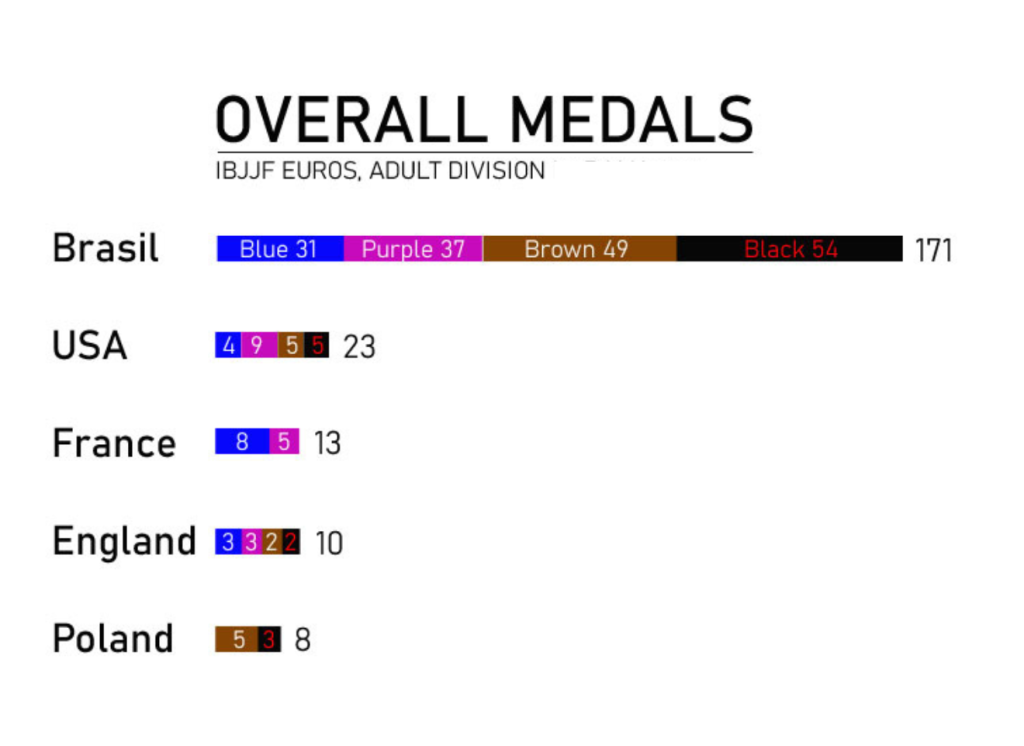
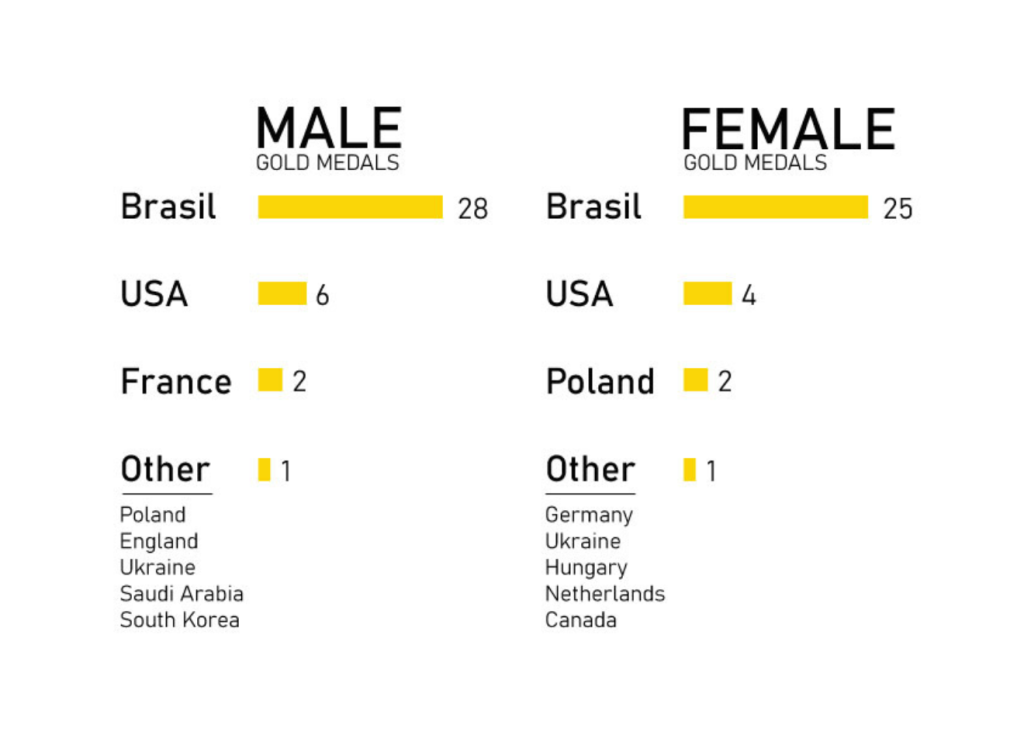
The USA’s athletes showcased their strength by securing second place overall in the medal tally standings, excelling in both the male and female divisions.
Their stellar performance was complemented by France’s impressive showing, earning them a solid third place across the board.
French grappling has steadily gained momentum over the years, and their remarkable display at the tournament reflects their consistent presence among Europe’s top countries in Brazilian Jiu-Jitsu. Despite the event being held in Paris, Le Bleu’s success is not solely attributed to home advantage; rather, it underscores France’s enduring prowess in the sport.
Notably, the Lions of England fell short of expectations, failing to secure a spot in the top three countries despite the reputation of the British grappling circuit as a premier hub for Jiu-Jitsu in Europe.
An intriguing observation from the medal tally is Japan’s relatively modest performance. Once regarded as the world’s third powerhouse in Brazilian Jiu-Jitsu, behind Brazil and the US, Japan only managed to clinch one medal at the IBJJF Euros. This outcome sheds light on the evolving landscape of international competition and highlights the shifting dynamics within the global Jiu-Jitsu community.
Below are the compiled results showcasing the total number of countries that earned medals and the cumulative count of their respective medals at the prestigious European Championship 2024, encompassing the adult division from blue to black belt.
This comprehensive breakdown provides insight into the diversity and competitive nature of the tournament, highlighting the global participation and success of athletes from various nations across different belt levels.
Medals List
171 medals: Brazil
23 medals: USA
13 medals: France
10 medals: England
8 medals: Poland
7 medals: Sweden
5 medals: Netherlands
5 medals: Ukraine
5 medals: Canada
5 medals: Finland
4 medals: Portugal
4 medals: Saudi Arabia
4 medals: Switzerland
3 medals: South Korea
3 medals: Hungary
3 medals: Belgium
3 medals: Germany
2 medals: Australia
2 medals: Norway
2 medals: Italy
1 medal: Greece
1 medal: Estonia
1 medal: Spain
1 medal: Slovakia
1 medal: Bahrain
1 medal: Angola
1 medal: Scotland
1 medal: Japan
1 medal: Marroco
1 medal: Denmark
1 medal: Ireland
1 medal: Argentina
1 medal: Czech Republic
1 medal: Wales
1 medal: Austria